
When the Math Stops Working
Many DC Metro landlords hold rental properties longer than they should because they focus on gross rent instead of net return. The real calculation includes mortgage payments, property taxes (up 15 to 30% in many jurisdictions over 5 years), insurance (rising 8 to 15% annually), maintenance reserves, vacancy loss, management time, and opportunity cost of equity. When net yield drops below 3 to 4%, the equity earns more in passive investments with zero management.
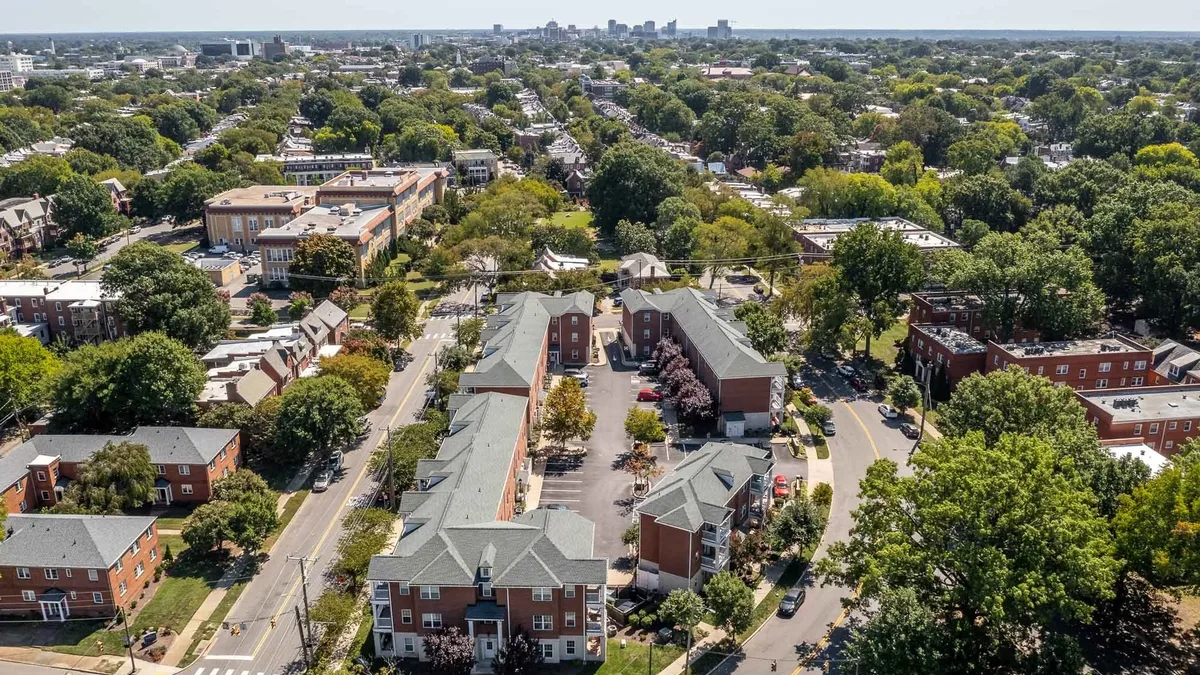
Selling Tenant-Occupied: No Eviction Required
We buy properties with tenants in place. Virginia, Maryland, and DC all require the new owner to honor existing leases. We take over the lease, the security deposit, and the tenant relationship at closing. You walk away with zero ongoing landlord obligations. No eviction, no lease-expiration wait, no tenant negotiation.
TOPA in DC Rental Sales
If your rental is in DC, the Tenant Opportunity to Purchase Act gives tenants right of first refusal. We navigate TOPA compliance on every DC rental transaction. The TOPA process adds time but does not prevent the sale.
DC Metro Landlord Economics: The Real Numbers
Here is a typical Fairfax County rental analysis that explains why landlords exit. A townhome purchased in 2008 for $380,000, currently worth $520,000, rented for $2,400/month.
Gross annual rent: $28,800. Expenses: Property taxes $5,200, insurance $1,800, maintenance reserve $5,200 (1% of value), vacancy loss $2,400 (1 month), management time (10 hrs/month at $50/hr equivalent) $6,000. Total expenses: $20,600. Net operating income: $8,200. Net yield on equity ($520,000): 1.6%.
That same $520,000 in a high-yield savings account earns 4.5% ($23,400/year) with zero management. The opportunity cost of continuing to landlord is $15,200 per year in this scenario.
TOPA Compliance for DC Rental Sales
If your rental is in Washington DC, the Tenant Opportunity to Purchase Act (DC Code 42-3404.02) gives tenants right of first refusal. You must offer tenants the opportunity to purchase before selling to a third party. Tenants have 30 days (single-family) or 45 days (multi-family) to respond. If they waive, the sale proceeds. Our title company handles TOPA compliance on every DC rental transaction.
Case Study: Fairfax Tired Landlord Exit
A Fairfax County landlord who had owned a tenant-occupied townhome for 18 years was done with late rent, deferred maintenance, and rising insurance. We bought the property with tenants in place and closed in 16 days. Read the full case study.
Virginia vs. Maryland vs. DC: Landlord Exit Comparison
Virginia: The easiest jurisdiction for selling tenant-occupied property. Virginia's Residential Landlord and Tenant Act (Code 55.1-1200 et seq.) requires the new owner to honor the existing lease, but there is no tenant right of first refusal. The lease transfers, the security deposit transfers, and the sale closes without tenant consent. 24-hour notice is required for property showings.
Maryland: Similar to Virginia, with the lease transferring to the new owner. Montgomery County has specific rental housing licensing requirements that the new owner must comply with. Takoma Park has rent stabilization that carries over with the property. Prince George's County has its own tenant protection ordinances. Each jurisdiction adds complexity but none prevent the sale.
Washington DC: The most complex jurisdiction for landlord exits due to TOPA (Tenant Opportunity to Purchase Act, DC Code 42-3404.02). Tenants must be offered the right of first refusal before selling to a third party. Single-family tenants have 30 days to respond, multi-family 45 days. The DC Rental Housing Act also regulates rent increases, and eviction protections are among the strongest in the country. Despite these protections, selling a DC rental property is entirely possible with a buyer who understands the process.
What Happens to Tenants After You Sell
We honor existing leases through their expiration. Tenants receive written notification of the ownership change (required by all three jurisdictions). Their security deposit transfers to us. Their rent amount stays the same through the current lease term. We become their landlord, and you are completely free of all landlord obligations from the moment of closing.
For tenants who are behind on rent or have caused property damage, we handle those situations after closing using the appropriate legal processes for each jurisdiction. You do not need to resolve tenant issues before selling.
The 1031 Exchange Option for Landlords
If you are exiting one rental property but considering reinvesting in real estate (perhaps a different property type or market), a 1031 tax-deferred exchange allows you to defer capital gains taxes by reinvesting the proceeds into a "like-kind" property within 180 days. The rules are strict: you must identify replacement properties within 45 days and close within 180 days, and the exchange must be facilitated by a qualified intermediary (not your own bank account).
Capitol Cash Offer can accommodate 1031 exchange transactions. Our closing timeline is flexible enough to align with your exchange requirements, and our title company coordinates with your qualified intermediary to ensure the proceeds flow through the proper exchange channels. If you are considering a 1031, discuss it with your CPA and let us know when you request your offer so we can structure the timeline accordingly.
The "One More Year" Trap
Many tired landlords tell themselves they will sell "after one more year" or "when the lease expires." But each year brings the same pattern: rising insurance, a new maintenance issue, another late rent situation, and the same mental exhaustion. The lease expires and you renew because finding a new tenant is easier than selling. Before you know it, five more years have passed and the property has aged further, the maintenance backlog has grown, and you are five years deeper into a situation you wanted to exit.
There is no perfect time to exit. There is only the decision to stop deferring and act. If you have been thinking about selling your rental for more than 6 months, the right time is now. Call (703) 991-2972 for a free, no-obligation assessment of your property's as-is value with tenants in place.
Landlord Resources
- Virginia Residential Landlord and Tenant Act: Code 55.1-1200 et seq.
- DC Office of the Tenant Advocate: ota.dc.gov, (202) 719-6560
- Montgomery County DHCA: montgomerycountymd.gov/dhca
- Fairfax County General District Court: (703) 246-3016